

Most Vendor Relationships Fail Because Companies Treat Symptoms, Not Root Causes
By Daniel Toebe on
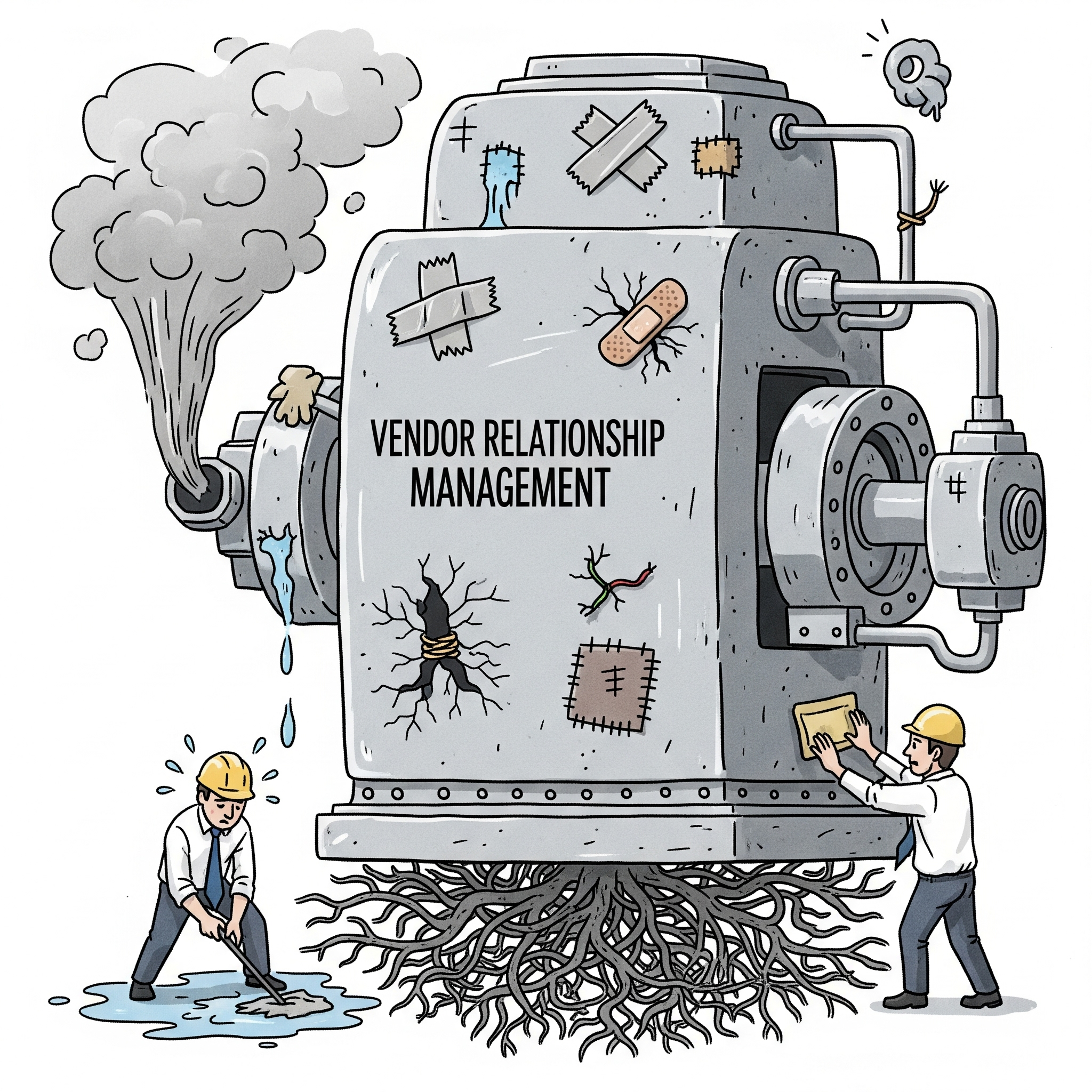
When I go to Product Managers that depend on vendor output for timelines, their response consistently reveals a systemic problem: “Roadmapping is difficult for hardware because most deliverables depend on vendor feedback, and vendors don’t provide timelines for completion.”
Sound familiar? You’re not alone.
After my personal experience, and the research I have done on other case studies I see common failures across IoT platforms and their vendor/partner relationships. I’ve learned that most companies are treating symptoms while ignoring the underlying disease. They’re frustrated with vendor performance but haven’t diagnosed why their vendor relationships consistently underperform.
The Symptoms Companies Mistake for Problems
Symptom #1: “Vendors Are Unresponsive”
What you see: Extended resolution times, generic “looking into it” responses, missed or not being able to create timelines
What you blame: Poor vendor customer service, lack of urgency, inadequate staffing
The real story: When I analyze vendor communication patterns, I consistently discover the vendor’s biggest complaint: “Your team waits until issues become critical before requesting support.”
Symptom #2: “Vendor Responses Are Useless”
What you see: Generic troubleshooting suggestions, responses that feel like “have you tried rebooting” when dealing with complex technical issues
What you blame: Vendors don’t understand your business, poor technical expertise, lazy support staff
The real story: Vendors were responding to minimal context tickets with standard troubleshooting because they had no information about your specific constraints, environment, or business impact.
Symptom #3: “Roadmapping Is Impossible”
What you see: Unpredictable vendor timelines, missed planning deadlines, inability to commit to customer deliverables
What you blame: Vendors don’t care about your business priorities, poor project management, unreliable partners
The real story: We were asking vendors for predictions without giving them the context needed to provide accurate estimates.
The Root Causes Behind Vendor Relationship Failure
Root Cause #1: Reactive Engagement Culture
The Pattern: Companies default to vendor engagement only when problems become business-critical.
Why it fails: This creates a crisis-driven relationship where vendors are constantly in firefighting mode. They can’t provide strategic input because they’re always responding to emergencies.
The cost: In this case vendors can only be reactive to your needs, with only the context of the issue at the moment. Working, roadmapping, and building a strategic partnership becomes impossible when every interaction is crisis-driven.
Root Cause #2: Communication Without Context
The Pattern: Companies submit tickets with minimal information, expecting vendors to fill in the gaps.
Why it fails: Vendors can’t provide specific solutions without understanding your environment, constraints, and business impact. They default to generic responses because they lack the context for targeted advice.
The cost: Extended back-and-forth communication cycles, delayed resolutions, and frustrated teams on both sides.
Root Cause #3: Vendor-as-Service-Provider Mindset
The Pattern: Companies treat vendors as order-takers rather than subject matter experts.
Why it fails: This approach misses the strategic value vendors can provide. When vendors are excluded from planning phases, their expertise is underutilized and their ability to proactively prevent issues is eliminated.
The cost: Missed opportunities for optimization, reactive problem-solving instead of preventive engineering, and vendor relationships that add cost without strategic value.
Root Cause #4: Undefined Success Metrics
The Pattern: Companies measure vendor relationships through subjective frustration levels rather than objective performance indicators.
Why it fails: Without clear metrics, you can’t distinguish between vendor performance issues and internal process problems. You also can’t track improvement or hold vendors accountable to specific standards.
The cost: Relationship problems persist across multiple vendor switches because the underlying measurement and management issues remain unaddressed.
Root Cause #5: No Systematic Process Design
The Pattern: Vendor interactions happen ad-hoc, with different team members following different approaches based on personal preferences.
Why it fails: Inconsistent processes create unpredictable vendor experiences. Vendors can’t optimize their support for your organization because your requirements and communication patterns vary by person and situation.
The cost: Vendor relationships perform at the lowest common denominator of your internal processes.
The Diagnostic Framework: Identifying Your Root Causes
Step 1: Map Your Vendor Interaction Patterns
Audit your last 20 vendor tickets:
- How many were submitted as “urgent” or “critical”?
- What percentage included comprehensive context vs. basic problem descriptions?
- How often did you engage vendors during planning vs. crisis response?
Red flags: >60% urgent tickets, minimal context documentation, reactive-only engagement
Step 2: Analyze Response Quality Patterns
Review vendor communications:
- Are you getting generic responses to specific problems?
- Do vendors ask for the same basic information repeatedly?
- How often do vendor solutions actually resolve issues on first attempt?
Red flags: Repetitive information requests, low first-contact resolution rates, standard troubleshooting for complex issues
Step 3: Evaluate Strategic Integration
Assess vendor involvement:
- When do vendors learn about your roadmap plans?
- How often do you leverage vendor expertise during requirements gathering?
- Do vendors provide proactive recommendations or only reactive support?
Red flags: Vendors learn about plans after decisions are made, minimal proactive input, purely transactional relationships
Step 4: Measure Process Consistency
Document process variations:
- Do different team members follow the same vendor communication protocols?
- Are priorities and escalation criteria clearly defined and consistently applied?
- Do you have standardized information requirements for different issue types?
Red flags: Process varies by person, unclear prioritization, inconsistent information sharing
The Systematic Solution: Treating Root Causes
Address Reactive Culture: Build Proactive Partnerships
Implementation: Engage vendors during planning phases, not just crisis response.
Tactical approach:
- Include vendors in quarterly roadmap reviews
- Schedule regular strategic check-ins beyond issue resolution
- Provide vendors with advance notice of planned initiatives
Measurement: Track proactive vs. reactive vendor interactions ratio
Standardize Context Communication
Implementation: Define required information for each vendor interaction type.
Tactical approach:
- Create “context checklists” for different issue categories
- Provide vendors with environment documentation and constraint summaries
- Include business impact and timeline context in every request
Measurement: Monitor first-contact resolution rates and reduce back-and-forth communication cycles
Elevate Vendors to Strategic Partners
Implementation: Treat vendors as subject matter experts, not service providers.
Tactical approach:
- Include vendor expertise in technical decision-making processes
- Leverage vendor knowledge for competitive intelligence and industry trends
- Create formal feedback loops for vendor recommendations
Measurement: Track vendor-initiated improvement suggestions and their implementation rate
Implement Performance Measurement
Implementation: Establish clear, objective vendor performance metrics.
Tactical approach:
- Define response time expectations by issue type and priority
- Measure solution effectiveness and customer satisfaction scores
- Create vendor scorecards with both performance and relationship metrics
Measurement: Regular vendor performance reviews with data-driven insights
Design Systematic Processes
Implementation: Create repeatable, consistent vendor management workflows.
Tactical approach:
- Document step-by-step procedures for different vendor interaction types
- Train team members on standardized communication protocols
- Implement approval and escalation workflows for consistency
Measurement: Process adherence rates and outcome consistency across team members
The Business Impact of Treating Root Causes
When I implemented this systematic approach across our three IoT platforms, the results spoke to the power of addressing root causes rather than symptoms:
Quantitative improvements:
- 47% reduction in average resolution time (95 days to <50 days)
- Elimination of generic vendor responses in favor of actionable solutions
- Predictable hardware roadmapping enabled by reliable vendor timeline commitments
Qualitative transformation:
- Vendors began proactively reaching out about upcoming changes and new capabilities
- Engineering teams stopped complaining about vendor relationships
- Product planning became timeline-driven rather than guesswork-based
Strategic outcomes:
- Vendor relationships transformed from cost centers to strategic partnerships
- Cross-platform process standardization that could scale with business growth
- Foundation for data-driven vendor performance management
The Choice: Symptoms or Systems
Every company faces the same choice when vendor relationships underperform: treat the symptoms by switching vendors, or address the root causes by improving internal systems.
Switching vendors feels faster and more satisfying. It provides the illusion of progress and allows teams to blame external parties for internal process failures. But companies that consistently struggle with vendor relationships across multiple partnerships have diagnosed the wrong problem.
The companies that build strong, productive vendor relationships understand that partnership quality is largely determined by internal processes, communication standards, and strategic approach. They invest in systems that enable vendors to succeed rather than processes that set them up to fail.
The questions that reveal your approach:
- When vendor relationships underperform, do you first examine their processes or yours?
- Do you measure vendor performance or vendor relationship management effectiveness?
- Are your vendor problems consistent across multiple partnerships?
- Do you engage vendors reactively or proactively?
The answers will tell you whether you’re treating symptoms or addressing root causes.
What patterns are you seeing in your vendor relationships? Are you addressing symptoms or root causes? I’d love to hear about the challenges you’re facing and the approaches that have worked for your organization.